How to Choose a Dual Shaft Motor for Global Sourcing 2026?
Choosing a Dual Shaft Motor for global sourcing in 2026 requires more than comparing price, voltage, and catalog speed. The motor must match the machine’s real workload. Consider both shaft ends, torque direction, radial loads, mounting space, noise, heat, and expected operating hours. A motor that looks suitable on paper may vibrate when two pulleys share uneven tension.
As motor-drive author Dr. Austin Hughes wrote, “The motor must be selected to suit the application.” That principle remains useful for international purchasing teams. Describe the complete working scene before requesting quotations: a conveyor moving 80 kilograms, a fan operating near salty air, or a gearbox starting repeatedly under load. These details help suppliers recommend the correct winding, bearings, insulation, shaft diameter, and protection rating.
Supplier evaluation also matters. Ask for verified drawings, test reports, performance curves, sample data, and production references. Check whether the quoted efficiency applies at your actual load, not only at the ideal test point. Confirm packaging strength before a long ocean shipment. Small omissions become expensive delays.
Global sourcing is rarely perfect. Some supplier data may be incomplete. Some “custom” claims need careful testing. A practical buyer should compare samples, inspect shaft runout, measure current, and review temperature rise under realistic conditions. Do not trust a polished brochure alone.
The strongest choice balances engineering fit, supplier reliability, lifecycle cost, and after-sales support. It may not be the cheapest Dual Shaft Motor. It should be the one that keeps the complete machine stable, serviceable, and predictable across borders.
Define Dual Shaft Motor Types and Operating Principles
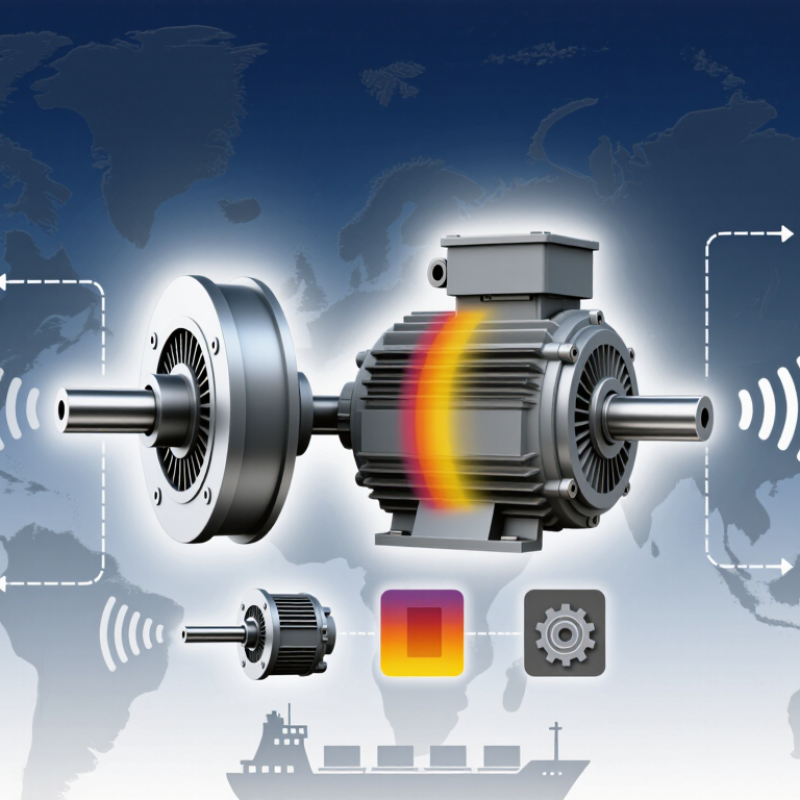
A dual shaft motor has one rotor and two shaft ends extending from opposite sides. Both ends rotate together at the same speed and direction. This design differs from two independent motors, which can operate separately. In practical sourcing work, clarify this distinction before comparing quotations. It affects wiring, torque calculations, mounting space, and safety guards.
Common types include brushed DC, brushless DC, AC induction, and stepper motors. A brushed DC version uses brushes and a commutator to switch current mechanically. It offers simple speed control but creates wear and electrical noise. A brushless design uses electronic switching instead. It usually provides longer service life and quieter operation. AC induction motors suit continuous industrial loads, while stepper motors move in controlled increments. Not every stepper motor maintains full torque at high speed.
The operating principle remains similar across most designs. Current creates a magnetic field in the stator, producing rotor torque. The rotor transfers that torque through both shaft ends. If one end drives a fan and the other supports an encoder, alignment becomes critical. Even a small offset can increase vibration. I have seen applications fail because engineers checked rated torque but ignored overhung load. That was a useful reminder. Ask for shaft diameter, keyway details, bearing limits, no-load speed, insulation class, and test records. Request actual drawings, not only catalog figures. A lower-cost motor may still require expensive adapters. Temperature testing under the real duty cycle is often overlooked.
| Motor Type | Operating Principle | Typical Dual-Shaft Arrangement | Typical Speed Range | Typical Continuous Output Range | Control Method | Key Advantages | Main Limitations | Suitable Applications | Global Sourcing Checkpoints |
|---|---|---|---|---|---|---|---|---|---|
| Brushed Permanent-Magnet DC Motor | A permanent-magnet stator creates the magnetic field, while brushes and a commutator mechanically switch the armature current to produce rotation. | One continuous rotor shaft extends through both endbells; both ends normally rotate at the same speed and torque direction. | Approximately 1,000–10,000 rpm | Approximately 5–500 W | Variable DC voltage, PWM speed control, or an H-bridge for reversing. | Low initial cost, simple control, good starting torque, and easy speed adjustment. | Brush and commutator wear, electrical noise, limited service life in dusty environments, and possible sparking. | Small pumps, fans, actuators, laboratory equipment, office equipment, and compact mechanisms requiring a rear feedback or accessory shaft. | Confirm brush material, commutator life, no-load current, locked-rotor limits, shaft runout, noise level, and applicable safety documentation. |
| Brushless DC Motor | Electronic commutation switches current through stationary windings in sequence, interacting with permanent magnets on the rotor. | Usually a single rotor shaft passing through both ends; the rear shaft can drive an encoder, fan, brake, or synchronizing mechanism. | Approximately 1,000–30,000 rpm | Approximately 10 W–5 kW | Six-step or sinusoidal electronic commutation using Hall sensors, sensorless control, or an encoder. | Longer service life than brushed designs, high efficiency, low maintenance, and good speed capability. | Requires an electronic controller; electromagnetic compatibility, sensor alignment, and thermal design must be managed. | Cooling fans, conveyors, pumps, robotics, automation equipment, medical mechanisms, and compact motion systems. | Specify controller compatibility, electrical angle, Hall sequence, phase resistance, back-EMF constant, insulation system, IP rating, and EMC requirements. |
| Permanent-Magnet Synchronous Motor | A rotating permanent-magnet rotor follows a rotating magnetic field generated by the stator; rotor position is controlled electronically for synchronous operation. | Commonly supplied with a through-shaft for a load on one side and an encoder, resolver, brake, or second mechanism on the opposite side. | Approximately 500–6,000 rpm | Approximately 200 W–100 kW | Vector control or field-oriented control, normally with an encoder, resolver, or high-quality sensorless drive. | High efficiency, high power density, precise torque control, and strong performance over a broad operating range. | Higher system cost, drive dependence, sensitivity to demagnetizing current, and more demanding commissioning. | Servo systems, precision conveyors, packaging machinery, machine tools, robotics, and energy-efficient industrial equipment. | Verify motor-drive pairing, feedback protocol, peak torque, demagnetization limits, thermal derating, shaft loading, and regional electrical compliance. |
| Two-Phase Hybrid Stepper Motor | Electromagnetic phase excitation moves a toothed permanent-magnet rotor through defined angular steps. Microstepping provides smoother motion. | A common dual-shaft version uses one continuous rotor shaft with front and rear output ends; both ends share the available torque. | Approximately 0–1,500 rpm | Approximately 10–1,000 W | Constant-current stepper driver with full-step, half-step, or microstep operation. | High holding torque, simple open-loop positioning, strong low-speed torque, and predictable incremental movement. | Torque falls as speed increases; resonance, vibration, acoustic noise, and missed steps can occur without suitable acceleration control. | Linear stages, indexing systems, labelers, small CNC equipment, valve actuators, and positioning mechanisms. | Check step angle, phase current, inductance, holding torque, pull-out torque, shaft diameter, bearing load, driver voltage, and acceleration profile. |
| Single-Phase Induction Motor | An alternating magnetic field induces rotor current and torque. An auxiliary winding, capacitor, or shaded-pole structure provides starting action. | A continuous shaft may extend through both ends, but the two output ends remain mechanically coupled and operate at the same speed. | Approximately 900–3,600 rpm at 50/60 Hz | Approximately 25 W–3 kW | Direct line operation, capacitor switching, or an inverter suitable for single-phase motor control. | Rugged construction, low maintenance, broad availability, and compatibility with many AC power systems. | Lower efficiency and starting performance than many electronically commutated motors; speed changes with load and supply frequency. | Fans, blowers, small compressors, pumps, household equipment, and general-purpose machinery. | Confirm rated voltage and frequency, capacitor value, starting method, efficiency class, thermal protection, insulation class, and local certification needs. |
| Three-Phase Induction Motor | A rotating magnetic field from three-phase stator currents induces current in the squirrel-cage rotor. Slip between synchronous speed and rotor speed produces torque. | Typically a through-shaft with a rear extension for a brake, tachometer, cooling fan, or secondary mechanical load. | Approximately 750–3,600 rpm at 50/60 Hz | Approximately 0.12–250 kW | Direct-on-line starting, star-delta starting, soft starter, or variable-frequency drive. | Robust, widely standardized, cost-effective at industrial power levels, and suitable for continuous-duty operation. | Higher inrush current with direct starting, lower low-speed cooling when inverter-driven, and no inherent position control. | Industrial pumps, fans, conveyors, compressors, machine tools, material-handling systems, and process equipment. | Specify IEC or equivalent frame size, mounting arrangement, duty cycle, efficiency class, IP protection, insulation system, inverter-duty requirements, and shaft loads. |
| Universal Series Motor | Series-connected stator and armature windings produce torque on either AC or DC supply because current direction reverses together in both windings. | A dual-shaft configuration is possible but less common because the motor is generally optimized for compact, high-speed applications. | Approximately 5,000–30,000 rpm | Approximately 100 W–2 kW | Voltage control, phase-angle control, or electronic speed control designed for the motor. | High starting torque, high power-to-weight ratio, and operation from either AC or DC in suitable designs. | Brush wear, electrical noise, high acoustic noise, and reduced efficiency compared with many modern alternatives. | Portable tools, compact appliances, high-speed blowers, and intermittent-duty equipment. | Check commutator life, speed overshoot, acoustic emissions, brush access, supply compatibility, thermal cycling, and required safety approvals. |
| Gearmotor with Dual Output Shafts | An electric motor generates rotation and a gearbox reduces speed while increasing available output torque. The gearbox may provide two mechanically linked output shafts. | Two gearbox output shafts can be arranged on opposite sides or in parallel; they may rotate in the same or opposite directions depending on the gear layout. | Approximately 5–500 rpm output speed | Approximately 5–10,000 N·m output torque | Direct voltage control, inverter control, BLDC controller, servo drive, or stepper drive depending on the motor section. | High output torque, compact mechanical transmission, and the ability to synchronize two driven mechanisms. | Gear noise, backlash, lower transmission efficiency, lubrication requirements, and increased assembly complexity. | Rollers, doors, lifting systems, conveyors, adjustable mechanisms, and equipment requiring synchronized dual outputs. | Confirm gear ratio, allowable radial and axial loads, backlash, output-shaft phasing, lubrication, duty cycle, mounting orientation, and service factor. |
FAQS
It has one rotor and two shaft ends. Both ends rotate together at the same speed and direction. They are not independent motors.
Common options include brushed DC, brushless DC, AC induction, and stepper motors. Each suits different control and load requirements.
Current creates a magnetic field in the stator. This field produces rotor torque. The rotor transfers torque through both shaft ends.
Confirm wiring, torque, mounting space, shaft diameter, keyway details, and bearing limits. Catalog drawings are not enough.
Poor alignment can increase vibration and noise. A small offset may damage couplings, bearings, or attached equipment.
Engineers may check rated torque but ignore overhung load. That mistake can cause early failure. I have seen this happen.
Request torque, speed, current, efficiency, temperature, and vibration records. Check both shaft ends separately.
Measure shaft diameter, keyway depth, bearing play, insulation resistance, and no-load current. Record vibration near both bearings.
No. Certification supports compliance, but it does not prove stable production. Factory records and sample testing still matter.
Run pilot units under the customer’s actual duty cycle and load. Catalog conditions can hide temperature or alignment problems. Need more evidence.
Conclusion
Choosing the right Dual Shaft Motor for global sourcing in 2026 requires a structured evaluation of both technical performance and supply-chain reliability. Start by understanding the motor’s shaft design, operating principle, rotation direction, mounting options, and suitability for applications requiring power transmission from both ends. Then match the motor’s voltage, current, power rating, speed range, torque, duty cycle, and dimensions to the equipment’s actual operating requirements. Shaft length, diameter, keyway design, bearing capacity, and noise or vibration limits should also be verified before purchase.
Quality and compliance are equally important. Review production standards, testing procedures, material consistency, certification documents, warranty terms, and the supplier’s ability to maintain stable quality at the required volume. A complete sourcing comparison should include unit price, tooling, packaging, shipping method, customs considerations, lead time, minimum order quantity, after-sales support, and replacement availability. By balancing performance, compliance, total cost, and supplier capability, buyers can reduce operational risks and select a dependable Dual Shaft Motor for international applications.
