Choosing the right stepper motor for your project can be challenging. Expert Dr. Jane Thompson emphasizes, “Selecting the perfect stepper motor is key to achieving precision in motion.” Stepper motors are widely used in robotics, CNC machines, and 3D printing due to their ability to provide accurate control over position and speed.
Understanding the specific application is critical. Different projects may require varying torque, speed, and size specifications. An incompatible stepper motor can lead to inefficiencies. Always consider the project's power requirements and the intended use of the motor. Each detail matters.
The selection process shouldn’t be rushed. Testing different motors can often shed light on your requirements. It’s essential to acknowledge that a poorly chosen stepper motor can hinder the project’s success, leading to frustration. Close attention to these factors can enhance the overall effectiveness of your design.
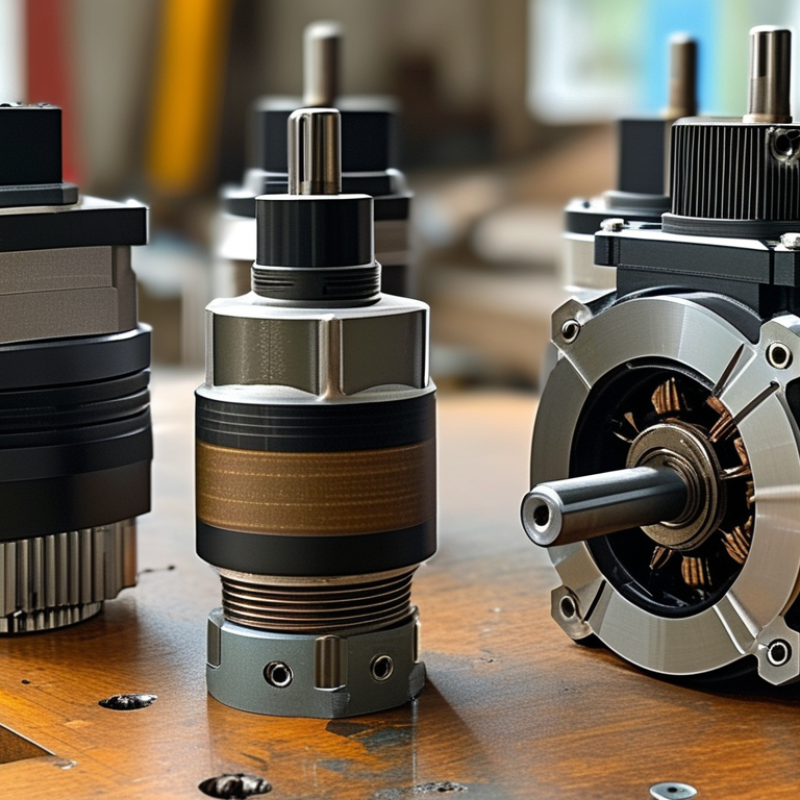
Understanding the Basics of Stepper Motors and Their Applications
Stepper motors are widely used in various applications, such as robotics, CNC machines, and 3D printers. These motors are prized for their precise control and high torque at low speeds. According to industry reports, the global stepper motor market was valued at over $3 billion in 2022. This figure underlines the growing demand for automation and precision in various sectors.
The choice of a stepper motor depends on several factors. First, consider the required torque and speed. For example, applications requiring high precision may benefit from micro-stepping capabilities. It's crucial to analyze system requirements before selecting a motor. Some projects may not need high torque, while others do. It's also essential to accommodate for thermal limits, as overheating can impact performance.
Moreover, consider the motor's control method. Closed-loop systems can enhance efficiency but add complexity. Open-loop systems may suffice for simpler tasks but often lack precision. The final decision should align with project goals and operational constraints. Experimenting with different motors could provide insights into optimal configurations for specific projects. Balancing performance with practicality remains fundamental.
Identifying Key Specifications for Stepper Motors Selection
Choosing the right stepper motor is essential for project success. Start by identifying key specifications. Torque, voltage, and step angle are significant factors. Torque determines the motor’s ability to handle loads. Higher torque allows for better performance in demanding applications.
Voltage impacts motor speed and efficiency. Selecting a motor with the appropriate voltage ensures optimal performance. Step angle influences precision. Smaller step angles lead to finer control, important for tasks requiring accuracy.
Tips: Always assess your project needs before choosing a motor. Consider load requirements, speed, and desired accuracy. Testing different motors can also reveal unexpected performance variations.
Don’t overlook the environmental conditions of your project. Motors may behave differently in extreme temperatures or humidity. Ensure selected motors are compatible with your project’s conditions to avoid setbacks.
Evaluating Torque and Speed Requirements for Your Project
When selecting a stepper motor, understanding torque and speed requirements is crucial. Torque determines the motor's ability to move a load. For example, a project requiring heavy lifting may need a motor with high holding torque. According to a recent industry report, stepper motors can provide holding torque ranging from 0.4 Nm to over 5 Nm, depending on their design and size. Knowing the torque requirement helps prevent performance issues like missed steps during operation.
Speed is equally important, especially in applications demanding rapid movement. Stepper motors typically operate at speeds between 200 to 3000 RPM. However, higher speeds can be detrimental to torque. A study indicated that torque drops significantly beyond 1000 RPM for many standard motors. This trade-off underscores the necessity to balance speed and torque based on specific application needs.
Evaluating your project requirements can reveal adjustments. For instance, a motor might perform well at lower speeds but struggle under high loads. Similarly, there can be scenarios where higher speed results in heating issues. Integrating both speed and torque requirements with a careful analysis allows for better decision-making in motor selection.
Comparing Different Types of Stepper Motors for Specific Needs
When selecting a stepper motor, it’s crucial to understand the different types available. There are unipolar, bipolar, and hybrid stepper motors. Each type serves unique applications. Unipolar motors are simpler. They require fewer connections but offer less torque.
Bipolar motors provide higher torque and efficiency. They need more complex control systems. Hybrid motors combine the best features of both types. They are popular for precise positioning.
Consider the specific needs of your project. If you need high precision, a hybrid stepper motor often is the best choice. But for simpler tasks, unipolar motors may suffice. Think about the required torque and speed as well. Not all projects need the highest specifications. Sometimes, lower torque with ease of control is more beneficial.
Reflect on your application’s power requirements as well. Higher voltage motors can deliver better performance. However, they often require more careful handling. Costs may also influence your decision. High-quality motors can be more expensive. Balancing quality and budget is essential. Your choice should align with both your technical needs and your project's goals.
Exploring Driver and Control Options for Stepper Motors
When selecting a stepper motor for a project, understanding driver and control options is crucial. Drivers convert commands from your control system into the specific needs of the motor. They manage power delivery, control direction, and regulate speed. There are several types of drivers available, including basic, microstepping, and advanced options. Each has unique characteristics that affect performance.
Tips for choosing a driver include matching the driver to your motor's specifications. Understand current ratings and voltage requirements. For complex movements, consider microstepping drivers. This option offers smoother motion but requires careful tuning.
Control options also vary widely. Simple systems might use basic PWM signals, while advanced applications could leverage computer interfaces. Some use dedicated microcontrollers that provide real-time feedback. This approach enhances precision but introduces complexity.
Remember, the chosen driver and control scheme should align with your project goals. Revisit your needs regularly. If you notice inconsistencies in performance, explore other configurations. This trial-and-error process can lead to improved functionality and reliability. Adjust settings based on feedback, and continue refining your choice for optimal performance.
FAQS
: Key specifications include torque, voltage, and step angle. Each plays a crucial role in performance.
Torque determines the motor's ability to handle loads. Higher torque enhances performance in demanding tasks.
Voltage influences motor speed and efficiency. Choosing the right voltage ensures optimal operational performance.
Step angle affects precision. Smaller angles allow for finer control, vital for accurate applications.
Assessing load, speed, and accuracy requirements is essential. Testing different motors can reveal unexpected performance variations.
Motors can behave differently in extreme temperatures or humidity. Compatibility with environmental conditions is crucial.
Understanding both is vital. High torque is needed for heavy loads, but speed can detract from torque performance.
Yes, torque often drops significantly beyond 1000 RPM for many motors. Balance is crucial for selecting the right motor.
Evaluating requirements may reveal necessary adjustments. A motor may excel at low speeds but struggle under heavy loads.
Higher speeds can lead to overheating. Careful analysis of speed and torque is needed to mitigate these problems.
Conclusion
When selecting the right stepper motor for your project, it's essential to understand its basic principles and potential applications. Stepper motors are widely used in various fields due to their precise control and positioning capabilities. After comprehending the fundamentals, the next step involves identifying key specifications such as step angle, holding torque, and voltage ratings, which are crucial for selecting a motor that meets your project requirements.
Moreover, evaluating the torque and speed requirements is vital, as these factors determine the performance of the stepper motor in your specific application. Different types of stepper motors, including permanent magnet, hybrid, and variable reluctance, are available, each suited for different uses. Finally, exploring driver and control options will help ensure that the stepper motor operates effectively within the constraints of your system, providing the desired performance and reliability.
