China Top Single Phase Motor Manufacturers and Suppliers?
China’s Single Phase Motor industry serves pumps, fans, compressors, workshop tools, and household equipment. These applications often require dependable starting torque and stable operation.
The International Energy Agency reports that electric motor systems consume a major share of global electricity. The U.S. Department of Energy also identifies motor efficiency as a practical energy-saving opportunity. However, these sources usually cover motor systems broadly, not single-phase units alone. Market forecasts from Fortune Business Insights and Grand View Research show continued growth in the wider electric motor sector. Their figures differ because their product definitions and regional coverage are not identical.
That distinction matters.
Thomas A. Lipo, an IEEE-recognized motor specialist, has described the induction motor as “the workhorse of industry.” His observation remains relevant when assessing Chinese manufacturers. A low purchase price is not enough. Buyers should examine copper fill, bearing quality, insulation class, thermal protection, starting performance, noise levels, and tested efficiency. Factory experience also matters. A serious supplier should provide traceable test records, clear nameplate data, and consistent samples from production batches.
This guide evaluates China’s top Single Phase Motor manufacturers and suppliers through practical purchasing criteria. It considers product range, customization ability, export experience, certifications, after-sales support, and application knowledge. Factory audits and independent testing can strengthen confidence. Still, no supplier ranking is perfect. Public data may be incomplete, and marketing claims can exceed field performance. A motor that performs well in a clean laboratory may struggle in a dusty workshop. Careful verification remains essential.
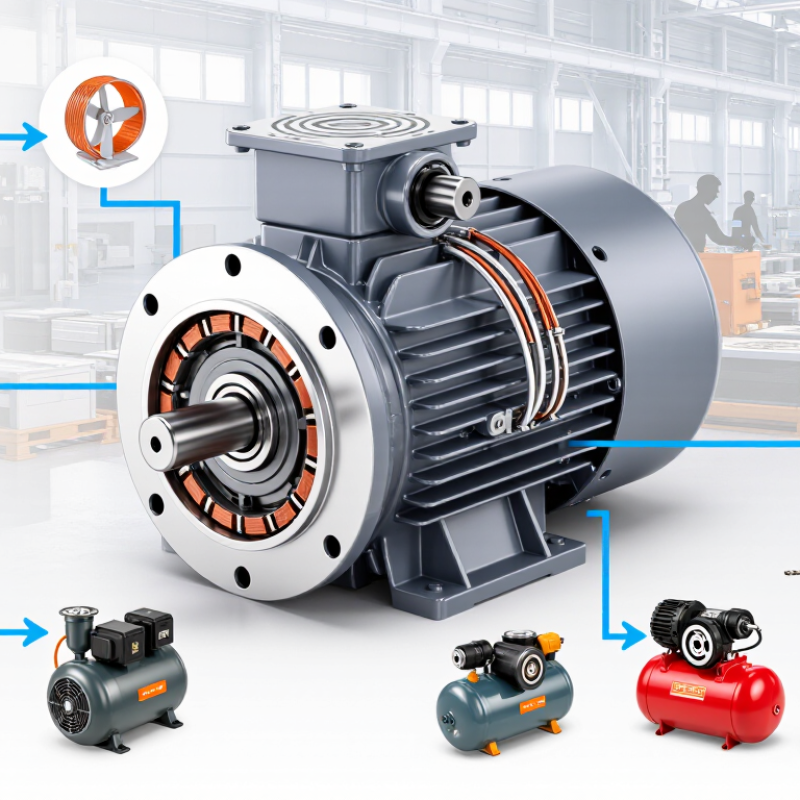
Single-Phase Motors: Types, Features, and Common Applications
China Top Single Phase Motor Manufacturers and Suppliers?
Single-phase motors are practical choices for equipment connected to household power. Common types include split-phase, capacitor-start, permanent-split-capacitor, and shaded-pole motors. Each design behaves differently under load. Capacitor-start motors deliver strong starting torque for compressors, pumps, and workshop tools. Permanent-split-capacitor motors run smoothly in fans, blowers, and small conveyors. Shaded-pole motors are compact but usually suit light-duty appliances.
Small details matter. Check rated voltage, frequency, speed, insulation class, and mounting dimensions before ordering. A motor that fits mechanically may still overheat electrically. The service factor also deserves attention, especially when the load changes during operation. In practical inspections, unusual noise often points to poor bearings, loose laminations, or misalignment. It should not be dismissed as normal vibration.
Chinese manufacturers and suppliers commonly offer customized shafts, terminal boxes, thermal protection, and enclosure options. Buyers should request test data, efficiency records, winding specifications, and sample inspection results. Ask how suppliers control insulation, balancing, and final-load testing. Good documentation builds trust. Still, paperwork is not proof by itself. A sample may perform well while later production varies, so periodic quality checks remain necessary. Selecting a motor only by price can create higher maintenance costs, wasted energy, and avoidable downtime.
China Top Single Phase Motor Manufacturers and Suppliers? - Single-Phase Motors: Types, Features, and Common Applications
| Motor Type | Starting Method | Typical Power Range | Typical Speed | Main Features | Common Applications | Key Selection Considerations |
|---|---|---|---|---|---|---|
| Split-Phase Motor | Auxiliary starting winding with a phase difference from the main winding | Approximately 0.06–0.37 kW | Usually 1,425–3,450 rpm at 50/60 Hz, depending on pole count | Simple construction Low cost Moderate starting torque | Small fans, blowers, grinders, office equipment, and light-duty machines | Suitable for applications with light starting loads and limited starting frequency |
| Capacitor-Start Motor | Starting capacitor and auxiliary winding; capacitor is disconnected after acceleration | Approximately 0.12–7.5 kW | Commonly 1,425–3,450 rpm at 50/60 Hz | High starting torque Reliable acceleration Good for heavy loads | Compressors, pumps, conveyors, air conditioners, refrigeration equipment, and machine tools | Check starting torque, capacitor rating, duty cycle, and overload requirements |
| Permanent-Split Capacitor Motor | One continuously connected run capacitor in series with the auxiliary winding | Approximately 0.03–2.2 kW | Usually 1,350–3,450 rpm at 50/60 Hz | Quiet operation Low maintenance Good efficiency at partial load | Ceiling fans, ventilation fans, pumps, air-handling units, and refrigeration fans | Best for continuous operation with low or moderate starting torque |
| Capacitor-Start, Capacitor-Run Motor | Starting capacitor provides high starting torque; run capacitor remains connected during operation | Approximately 0.25–5.5 kW | Typically 1,425–3,450 rpm at 50/60 Hz | High starting torque Improved running efficiency Better power factor | Workshop machinery, pumps, compressors, woodworking equipment, and heavy-duty fans | Consider capacitor arrangement, thermal protection, efficiency, and operating load profile |
| Shaded-Pole Motor | Copper shading ring creates a delayed magnetic field in part of the pole | Approximately 1–200 W | Commonly 900–3,000 rpm at 50/60 Hz | Very simple design Low cost Low starting torque | Small fans, air purifiers, refrigerator fans, timers, toys, and compact appliances | Use only where low starting torque and modest efficiency are acceptable |
| Universal Motor | Series-connected field and armature windings permit operation on AC or DC | Approximately 0.1–2.5 kW | Often 5,000–30,000 rpm, depending on design and load | Very high speed High power-to-weight ratio High starting torque | Vacuum cleaners, mixers, drills, blenders, hair dryers, and portable power tools | Evaluate noise, brush wear, electromagnetic interference, cooling, and service life |
| Single-Phase Induction Motor | Requires an auxiliary starting arrangement such as a capacitor, resistance, or shaded pole | Approximately 0.03–15 kW | Typically 900–3,450 rpm at 50/60 Hz | Rugged construction Low maintenance Industrial availability | Fans, pumps, compressors, conveyors, agricultural equipment, and general-purpose machinery | Match voltage, frequency, rated power, speed, torque, enclosure, and duty classification |
| Single-Phase High-Efficiency Motor | Usually capacitor-start or capacitor-run configuration with optimized magnetic and winding design | Approximately 0.37–7.5 kW | Commonly 1,425–3,450 rpm at 50/60 Hz | Reduced energy consumption Lower operating temperature Improved service life | HVAC systems, pumps, compressors, agricultural machinery, and continuous-duty equipment | Compare efficiency class, annual energy cost, load factor, and local regulatory requirements |
| Brake Motor | Induction motor combined with an electromagnetic or mechanically released brake | Approximately 0.12–7.5 kW | Typically 1,425–3,450 rpm at 50/60 Hz | Rapid stopping Position holding Enhanced operational safety | Hoists, lifting equipment, gates, conveyors, packaging machines, and positioning systems | Check braking torque, stopping time, brake release voltage, duty cycle, and maintenance access |
| Outdoor or Washdown Motor | Usually capacitor-start or capacitor-run induction design with enhanced enclosure protection | Approximately 0.25–5.5 kW | Typically 1,425–3,450 rpm at 50/60 Hz | Moisture resistant Corrosion protection Suitable for demanding environments | Food-processing equipment, agricultural fans, water pumps, outdoor machinery, and washdown areas | Verify ingress protection, coating system, drainage, ambient temperature, and chemical exposure |
| General Supplier Specification Checklist | Confirm the appropriate starting design for the driven load | Specify rated output in watts or kilowatts | State rated speed, frequency, and number of poles | Voltage Frequency Efficiency Protection | Residential appliances, commercial systems, agricultural equipment, and industrial machinery | Request rated current, torque data, insulation class, IP rating, mounting type, shaft dimensions, bearings, duty rating, certification, and test documentation |
FAQS
Common types include split-phase, capacitor-start, permanent-split-capacitor, and shaded-pole motors. Each design responds differently under load. Choose based on starting torque, speed, and duty cycle.
Capacitor-start motors provide strong starting torque. They suit compressors, pumps, and workshop tools. They can handle demanding starts better than light-duty designs.
Permanent-split-capacitor motors run smoothly in fans, blowers, and small conveyors. They fit applications needing steady operation rather than extreme starting force. Smooth running matters.
Shaded-pole motors are compact and usually support light-duty appliances. They are generally unsuitable for equipment requiring high starting torque. Check the load carefully.
Check rated voltage, frequency, power, speed, insulation class, and mounting dimensions. Also review service factor and operating conditions. A mechanical fit does not guarantee safe electrical performance.
Unusual noise may indicate worn bearings, loose laminations, or shaft misalignment. Do not dismiss it as normal vibration. Stop and inspect.
Request factory details, production capacity, test records, drawings, and warranty terms. Ask how the supplier controls winding, balancing, insulation, and final-load testing. Evidence matters.
One sample cannot prove stable production quality. Request small-batch checks and traceable inspection reports. I once trusted polished samples and ignored delayed documents. That mistake became expensive.
Test starting performance, current, temperature rise, noise, and vibration under realistic loads. Use the intended voltage, frequency, and operating cycle. Catalogue claims may miss field conditions.
Include unit price, shipping protection, spare parts, tooling, testing, and delivery stability. A cheaper motor may increase energy use and maintenance costs. Price alone misleads.
Conclusion
This guide explains the main types of Single Phase Motor, including capacitor-start, capacitor-run, shaded-pole, and universal designs, along with their key features, performance characteristics, and common applications in household appliances, pumps, fans, compressors, tools, and light industrial equipment. It also introduces China’s single-phase motor manufacturing industry, highlighting its broad production capacity, engineering capabilities, supply-chain advantages, and ability to provide customized solutions for different voltage, power, speed, and installation requirements.
To identify reliable Chinese manufacturers and suppliers, buyers should evaluate product quality, certifications, technical expertise, production facilities, testing procedures, delivery reliability, communication, warranty terms, and after-sales service. The guide also offers practical advice for comparing quotations, confirming specifications, requesting samples, checking quality-control documents, and establishing clear purchasing agreements. By combining technical evaluation with careful supplier verification, international buyers can select a dependable partner and source efficient, durable, and cost-effective single-phase motors for their specific projects.
