China has a broad industrial motor sector, but choosing a Synchronous Motor manufacturer takes more than scanning a company list. Buyers need to match the motor to its real operating conditions. A pump room, steel mill, and shipboard system place different demands on speed control, starting torque, insulation, and cooling. Small details matter. A nameplate rated for one duty may not suit another.
This guide examines leading Chinese manufacturers through practical, verifiable factors: product range, engineering support, quality documentation, customization capability, and export experience. It also considers whether suppliers can explain efficiency ratings, voltage options, protection levels, and maintenance needs clearly. These points help distinguish a capable factory from a polished catalogue. Rankings can still be imperfect. Public information varies, and a manufacturer’s strengths may depend on the application, production site, or service region. That deserves a closer look. Readers should confirm current specifications, certifications, lead times, and references directly with each supplier before making a purchase. The goal is not to declare one company best for every buyer. It is to help readers compare options with sharper questions and fewer assumptions.
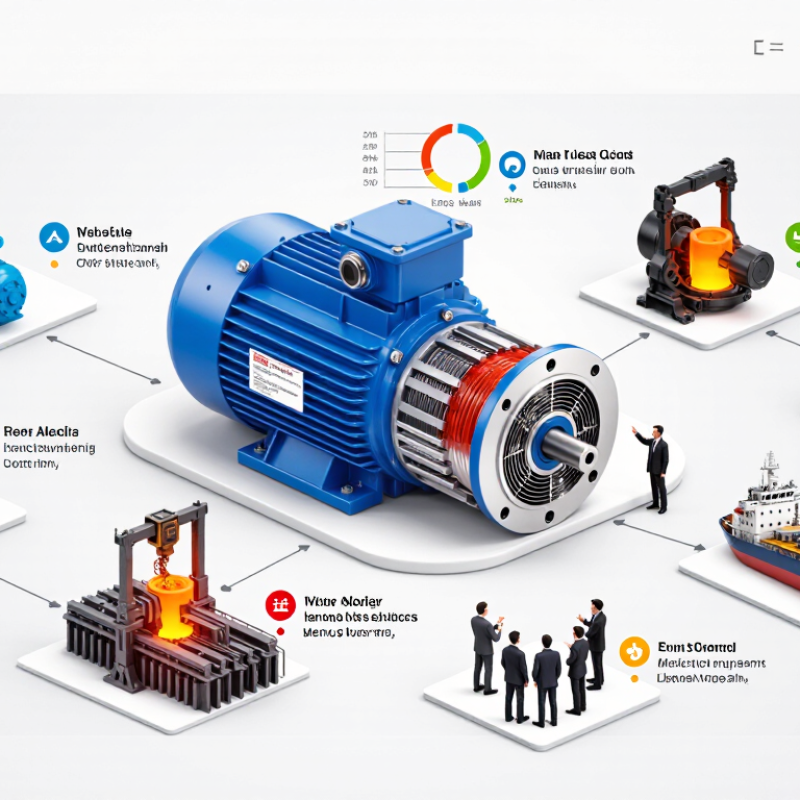
China’s Synchronous Motor Manufacturing Landscape
China’s synchronous motor sector draws on a broad industrial base: electrical steel processing, precision machining, coil winding, and control-system integration. These capabilities support motors for compressors, pumps, mills, and other steady-load applications. Production quality still varies between suppliers. Test records matter.
The International Energy Agency’s motor-driven-systems analysis estimates that such systems use about 45% of global electricity. This figure covers many motor types, not synchronous motors alone, but it explains the industry’s focus on efficiency and operating costs. In China, manufacturers compete through customized designs, production scale, and testing for temperature rise, vibration, and power factor. The landscape is substantial, yet not uniformly transparent; published performance data can be difficult to compare across suppliers.
Tips: Request efficiency curves, load-test results, and service-life assumptions for the intended operating range. Compare equivalent ratings, not catalogue claims alone.
Synchronous speed by pole count at 50 Hz and 60 Hz (rpm)
Synchronous speed is calculated using the standard formula: speed (rpm) = 120 × supply frequency (Hz) ÷ number of poles. China’s standard grid frequency is 50 Hz. These are theoretical speeds, not manufacturer performance or market-share data.
A leading manufacturer should explain how its motor fits your load, not just quote a high efficiency figure. Share the operating speed, required torque, duty cycle, supply conditions, and starting method. Then compare the proposed pole count, excitation system, and protection level against your actual installation. Specific answers matter.
Ask for evidence. Request recent test records for temperature rise, vibration, insulation, and rotor balance, and check that the tested model matches the quotation. A factory visit can reveal winding work, assembly controls, and whether instruments are calibrated. Look closely at the details.
Also assess engineering support and delivery discipline. Can the team review your drawings, explain maintenance intervals, and provide realistic lead times? Check references for similar loads, and verify that any certificates cover the product and facility being offered. A polished brochure is not proof. I would still leave room for judgment: one missed document does not settle the question, but repeated vague answers should prompt a closer review.
Profiles of notable Chinese synchronous motor manufacturers are best compared by engineering depth, not catalog size. Some focus on low-speed, high-torque machines for pumps, compressors, or heavy industrial lines. Others develop permanent-magnet synchronous designs for compact equipment and precise speed control. The International Energy Agency’s 2011 report, Energy-Efficient Motor Systems, estimates that motor-driven systems use about 45% of global electricity. That figure makes efficiency claims worth checking carefully.
A useful manufacturer profile should explain its design range, insulation options, cooling method, and testing process. Ask for efficiency data at the actual operating load, not only at a single rated point. Review temperature-rise and vibration results, and confirm that the proposed motor matches the driven machine. A neat brochure helps. It proves little by itself. Factory audits and traceable test records offer stronger evidence, though they can still leave questions about long-term service quality.
Tips: Request a test report for the exact motor configuration, then verify its rating, test conditions, and date. Small details matter.
Synchronous motors serve applications where stable speed and power-factor control matter. Common designs include wound-field, permanent-magnet, and synchronous-reluctance types. Each works differently. Wound-field machines allow excitation adjustment; permanent-magnet designs can be compact, while reluctance designs avoid rotor magnets. Selection depends on load, starting method, operating speed, and maintenance access—not efficiency claims alone.
The International Energy Agency’s 2011 motor-systems report estimates that electric motor-driven systems use about 45% of global electricity. That figure covers many motor types, not synchronous machines specifically. The U.S. Department of Energy’s 2014 industry sourcebook estimates motor-driven systems account for about 68% of U.S. manufacturing electricity use. These figures explain why efficiency deserves attention, but they do not predict savings at an individual plant. Measure the real load first.
In practice, synchronous motors may drive compressors, large pumps, mills, and other steady-duty equipment. Engineers assess starting torque, grid conditions, cooling, and variable-speed requirements before choosing a design. A permanent-magnet motor may suit a compact drive; a wound-field unit can offer excitation control for demanding processes. Small details matter. Dust, heat, and frequent starts can change maintenance needs. One caveat: published efficiency ratings rarely capture the full system, including drives, cooling, and part-load operation. That gap deserves a closer look.
Who Are the Top Synchronous Motor Manufacturers in China?
Comparing Manufacturers by Capacity, Quality, and Service
Comparing Chinese synchronous motor manufacturers starts with the application, not the size of a factory. Capacity matters when a supplier must handle repeat orders, custom shafts, or tight delivery windows. Ask for monthly output, typical lead times, and examples of similar motor configurations. A large production line may look reassuring, but it does not guarantee flexible scheduling. That matters.
Quality checks should be specific. Request test records for efficiency, temperature rise, vibration, and insulation resistance, then confirm how each result is measured. Ask whether routine testing covers every unit or only sampled units. Review how the supplier traces components and handles failures. A polished certificate alone is not enough; real documentation should match the motor model and agreed specifications. This is not a perfect scorecard, but it helps expose gaps before an order is placed.
Service can separate two suppliers with similar technical offers. Check how quickly engineers answer selection questions, whether drawings are reviewed before production, and what support is available during commissioning. For export orders, clarify packaging, spare parts, and response times across time zones. I would weigh these details heavily, though response speed during sales may not reflect support after delivery. Compare written commitments with actual references where possible.
Company-specific production capacity and service performance should be checked against current, verifiable supplier records. The table below provides factual, comparable indicators to request when assessing Chinese synchronous motor manufacturers; it does not rank or identify individual companies.
| Comparison Area | Metric to Compare | Evidence to Request | How to Evaluate It |
|---|---|---|---|
| Manufacturing capacity | Annual output for synchronous motors, reported by motor type and power range | Recent production records, available production slots, and references for comparable projects | Compare documented output and lead times for the required motor class, rather than total factory output across unrelated products. |
| Product fit | Rated power, voltage, frequency, speed, torque, duty, and installation conditions | Datasheet, approved drawings, nameplate data, and a technical proposal matching the application | Check that the proposed ratings and operating conditions match the driven equipment and site requirements. |
| Quality system | Quality-management controls and traceability of materials and production | Current quality-management certificates, certificate scope, inspection plans, and material traceability records | Verify certificates with the issuing body and confirm that their scope covers the relevant manufacturing site and product activity. |
| Testing and performance | Routine and, where specified, type-test results for the offered motor | Test procedures and reports covering the agreed electrical, mechanical, temperature-rise, and performance checks | Agree the acceptance criteria and test scope in the purchase specification; check that reports identify the tested unit or design. |
| Standards alignment | Applicable rotating-machine standards and project requirements | A standards-compliance statement identifying the standard and edition used for design and testing | IEC 60034-1 specifies rating and performance requirements for rotating electrical machines; confirm the applicable edition and any project-specific requirements. |
| Delivery reliability | Quoted lead time, shipment history, and schedule performance for comparable orders | Written delivery schedule, milestone plan, and customer references for similar projects | Compare like-for-like scope, including engineering, inspection, documentation, and shipping—not just the quoted manufacturing period. |
| After-sales service | Warranty terms, technical support availability, spare-parts provision, and repair capability | Written warranty, service contact details, support coverage, spare-parts list, and escalation procedure | Compare stated response and resolution commitments, service location, and exclusions in the contract. |
| Total cost of ownership | Purchase price, installation needs, energy use, maintenance, and expected spare-parts costs | Itemized quotation, guaranteed performance data where applicable, maintenance recommendations, and spare-parts pricing | Compare offers using the same operating assumptions, duty profile, service life, and energy-cost inputs. |
Note: Production capacity, quality results, delivery records, and service commitments vary by manufacturer, product type, and order. Confirm all company-specific figures directly with the supplier and document agreed requirements in the contract.
They serve compressors, pumps, mills, and other steady-load applications. The supply base includes machining, coil winding, and control-system integration.
Motor-driven systems use about 45% of global electricity, across many motor types. Efficiency can affect operating costs. The exact savings depend on the application.
Ask for efficiency curves and load-test results for the intended operating range. Check temperature rise, vibration, and power factor records. Match each record to the motor model.
Ask whether every unit is tested or only a sample. Review measurement methods, component traceability, and failure handling. A certificate alone is not enough.
No. Ask about monthly output, typical lead times, and similar custom configurations. A large production line may still have limited scheduling flexibility.
Compare equivalent ratings and agreed specifications, not catalogue claims alone. Published data can be difficult to compare. It takes careful checking.
Confirm drawing reviews, commissioning support, packaging, spare parts, and response times across time zones. Get commitments in writing.
Not reliably. Compare written service commitments with customer references where possible. Sales response speed may not tell the whole story.
China has developed a diverse Synchronous Motor manufacturing landscape, serving industries that require reliable speed control, energy efficiency, and precise operation. Leading manufacturers can be assessed by their production capacity, engineering expertise, quality management, customization options, and ability to provide dependable technical support. Rather than relying on claims alone, buyers should compare product specifications, testing practices, delivery capabilities, and after-sales service.
Chinese manufacturers offer motor types and technologies suited to applications such as industrial machinery, pumps, compressors, and power systems. The right choice depends on operating conditions, required output, installation needs, and long-term maintenance expectations. Comparing manufacturers across capacity, product consistency, service responsiveness, and application experience helps businesses identify a suitable partner and select a motor solution that balances performance, reliability, and cost.
