Why Choose an Induction Motor for Your Business?

Time:2026-11-06 Author:Mason
0%

Choosing an Induction Motor is a practical business decision, not just a specification choice. These motors are widely used in pumps, fans, compressors, conveyors, and other equipment that runs for long hours. Their simple construction, reliable operation, and limited brush-related maintenance can help reduce routine service needs. Still, no motor is automatically the right fit.

The International Energy Agency’s 2011 report, Energy-Efficiency Policy Opportunities for Electric Motor-Driven Systems, estimates that motor-driven systems use about 45% of global electricity. The U.S. Department of Energy reports that motors account for roughly 69% of electricity use in American manufacturing. Those figures make efficiency worth examining closely. Even a small improvement can matter when a motor runs through every shift. Yet purchase price is only one part of the calculation.

IEA Executive Director Dr. Fatih Birol has described energy efficiency as “the first fuel.” That idea applies to motor choices, though operating conditions matter just as much. A motor paired with an unsuitable load or poor control strategy may waste energy despite its reputation. Check the required torque, starting demands, duty cycle, supply, and maintenance access before selecting a model. Listen for vibration, too. It can be an early warning.

This guide explores where induction motors fit, how to compare efficiency and lifecycle costs, and which questions to ask suppliers. It also recognizes a less convenient truth: the best choice depends on the application, not the label.
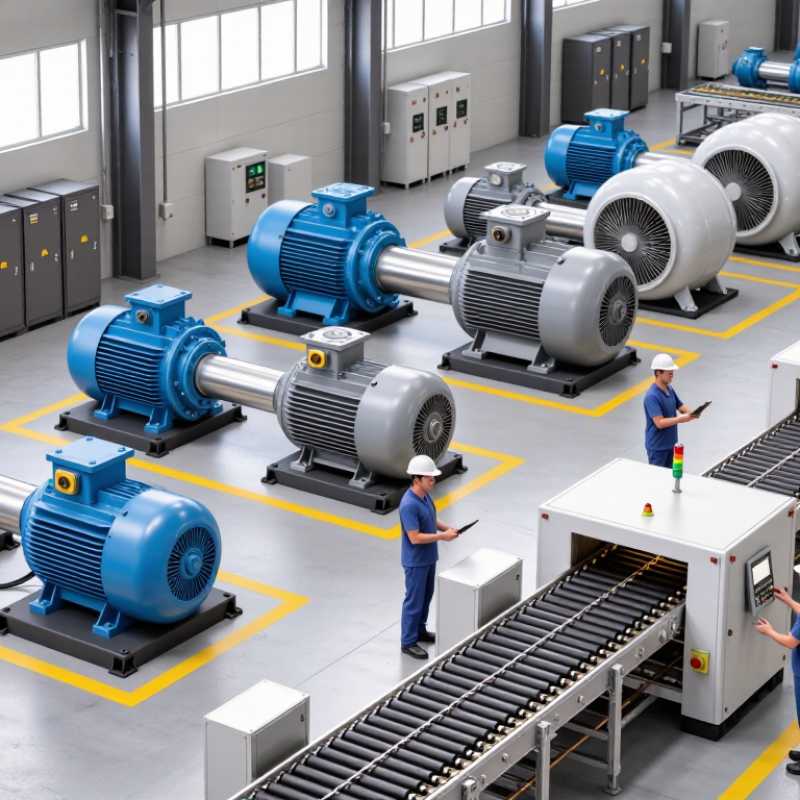
Why Choose an Induction Motor for Your Business?

How Induction Motors Work

How Induction Motors Work

An induction motor turns electrical energy into rotation without brushes in its common squirrel-cage design. Alternating current in the stator creates a rotating magnetic field. That field induces current in the rotor, and the interaction produces torque. The rotor must turn slightly slower than the field; this difference, called slip, keeps induction working. The principle is simple, but operating conditions matter.

The U.S. Department of Energy’s 2014 report, Improving Motor and Drive System Performance, estimates motor-driven equipment uses about 69% of U.S. industrial electricity. That figure includes many motor types, not induction motors alone, but it shows why efficiency deserves attention. Induction motors are widely used because their straightforward construction suits pumps, fans, and conveyors. Still, a motor can waste energy when oversized or poorly matched to its load. A hum in the machine room may sound normal, yet rising heat or vibration deserves investigation.

Tips: Match motor capacity to the real load, check alignment and cooling, and record energy use. Ask a qualified technician to assess variable-speed needs; not every application benefits from added controls. The overlooked detail? Bearings still need care.

Key Advantages for Business Operations

Why Choose an Induction Motor for Your Business?
Key Advantages for Business Operations

An induction motor can be a practical choice when equipment must run steadily through long shifts. Its simple, brushless construction reduces routine wear compared with motors that use brushes. In a workshop, that may mean fewer scheduled component changes and less time spent opening the motor housing. Downtime is expensive.

These motors are widely used for pumps, fans, compressors, and conveyors because they are durable and available in many power ratings. Their enclosed designs can handle dusty work areas when the motor is correctly selected and maintained. A variable-frequency drive can adjust speed to match demand, which may reduce energy use in suitable applications. The savings depend on the load, operating hours, and control setup; they are not automatic.

Induction motors also tend to start reliably and tolerate everyday operating demands. Still, startup current can be high, and poor sizing can cause needless energy costs or weak performance. Check the duty cycle, supply conditions, enclosure rating, and expected load before choosing one. A motor that looks oversized on paper is not always safer. I would verify the application data rather than assume a standard model will fit. Small details matter.

Comparing Induction Motors with Other Motor Types

Why Choose an Induction Motor for Your Business?

Comparing Induction Motors with Other Motor Types

An induction motor suits many pumps, fans, conveyors, and workshop machines because its rotor has no brushes. That means fewer wear parts and less routine service than a brushed DC motor. In a dusty plant room, fewer exposed contacts can make maintenance simpler. Not maintenance-free, though. Bearings, cooling passages, and insulation still need inspection.

Compared with permanent-magnet motors, induction motors avoid magnets and can be a practical choice where purchase cost and repair access matter. Permanent-magnet designs may deliver higher efficiency in some applications, especially at partial load, so the duty cycle deserves careful checking. An induction motor also runs slightly below synchronous speed under load; this slip is normal, not a fault. A variable-frequency drive can control its speed, but adds cost and setup work. I have seen specifications focus on rated efficiency while overlooking long hours at low load. That is an easy mistake. Compare motor curves, starting torque, supply conditions, and expected operating hours before choosing.

Choosing an Induction Motor for Your Requirements

Choosing an induction motor starts with the work it must do, not just its rated power. Record the driven equipment, expected load, operating hours, and starts per hour. A conveyor carrying heavy material may need strong starting torque, while a fan often runs steadily at a lighter load. The difference matters.

Check the supply voltage, phase, frequency, mounting position, and available space. Then compare the motor’s rated speed with the machine’s required speed. If speed control is needed, confirm that the motor is suitable for inverter operation and consider cooling at low speeds. Small details matter. Dust, moisture, and high ambient temperatures can affect enclosure choice and service life. A motor that fits the frame may still be a poor fit for the site.

Ask how often the motor will run near full load, and whether maintenance access is practical. Efficiency matters most over many operating hours, but an oversized motor can waste energy at light loads. I have seen selections look sound on paper, then feel less convincing after actual duty cycles are reviewed. Leave room to check assumptions with measured load data before ordering.

Installation, Maintenance, and Operating Costs

An induction motor can keep a business’s equipment running reliably, but its purchase price is only part of the cost. Before installation, check the supply voltage, number of phases, expected load, and daily operating hours. A motor that is too small may overheat under heavy use. One that is oversized can waste energy. Small details matter. Have a qualified technician check the mounting surface, shaft alignment, wiring, and overload protection. A rushed installation can lead to vibration, noise, and avoidable repair bills.

Operating costs depend on how hard and how often the motor runs. Motors tend to perform efficiently near their rated load, so compare the motor size with real operating conditions, not just peak demand. A variable-speed drive may reduce energy use when a process needs changing speeds, though it adds upfront cost and requires a compatible setup. Maintenance is usually straightforward, not nonexistent: inspect bearings, keep air passages clear, and watch for unusual heat or vibration. Electricity rates and actual load can change the payback calculation. A spreadsheet helps, but it can still miss shifts in production.

Tips: Record the motor’s temperature and vibration after installation to establish a baseline. Check connections and ventilation during routine inspections. Keep a simple log of operating hours and repairs. I would not rely on memory; small changes are easy to overlook.

Why Choose an Induction Motor? Installation, Maintenance & Operating Costs

Five-year cost comparison for a 7.5 kW, four-pole induction motor. Higher-efficiency motors can reduce electricity costs, especially in applications with long operating hours.

Illustrative USD estimates, not a supplier quote. Assumptions: 4,000 operating hours per year, electricity at $0.12/kWh, nominal efficiencies of 91.7% (IE3) and 93.6% (IE4), installed cost budgets of $1,800 and $2,100, and maintenance budget of $150 per year for each motor. Actual costs vary with motor specification, load, site, and electricity tariff. Induction motors have no brushes to replace, which can help keep routine maintenance simple.

FAQS

What should I check before choosing an induction motor?

List the driven equipment, expected load, operating hours, and starts per hour. Check voltage, phase, frequency, mounting position, and available space.

Does the equipment type affect motor selection?

Yes. A heavy conveyor may need strong starting torque, while a fan often runs steadily at a lighter load. The difference matters.

How do I match motor speed to the machine?

Compare the motor’s rated speed with the machine’s required speed. If speed control is needed, check inverter compatibility and cooling at low speeds.

Can a motor fit physically but still be unsuitable?

Yes. Dust, moisture, and high temperatures can affect enclosure choice and service life. A matching frame is not enough.

Is a larger motor always a safer choice?

No. An undersized motor may overheat under heavy use, while an oversized motor can waste energy at light loads. Check measured load data when possible.

What should a technician inspect during installation?

Have a qualified technician check the mounting surface, shaft alignment, wiring, and overload protection. A rushed installation can cause vibration, noise, and repair costs.

What maintenance does an induction motor need?

Inspect bearings, clear air passages, and watch for unusual heat or vibration. Routine checks help. Maintenance is not nonexistent.

How can I track the motor’s condition and running costs?

Record temperature and vibration after installation, then keep a simple log of operating hours and repairs. I would not rely on memory; small changes are easy to miss. A spreadsheet helps, but production shifts can make estimates less certain.

Conclusion

An Induction Motor converts electrical energy into mechanical motion through electromagnetic induction, making it a practical choice for many business applications. Its straightforward design, dependable performance, and ability to operate continuously can help support production and reduce interruptions. Compared with some other motor types, induction motors are often valued for their durability and relatively simple construction, though the best option depends on the required speed, torque, precision, and operating environment.

Choosing the right motor starts with assessing the equipment’s load, power supply, duty cycle, and installation conditions. Businesses should also consider initial purchase and installation expenses alongside energy use, routine maintenance, and expected service life. Proper sizing, professional installation, and regular inspections can help an induction motor operate efficiently and reliably over time, supporting a balanced decision based on both operational needs and total ownership costs.

Mason

Mason

Mason is a seasoned marketing professional with a deep expertise in the company's offerings and a passion for driving brand awareness. With a strong background in digital marketing strategies, he has an innate ability to connect with diverse audiences and effectively communicate product benefits.......